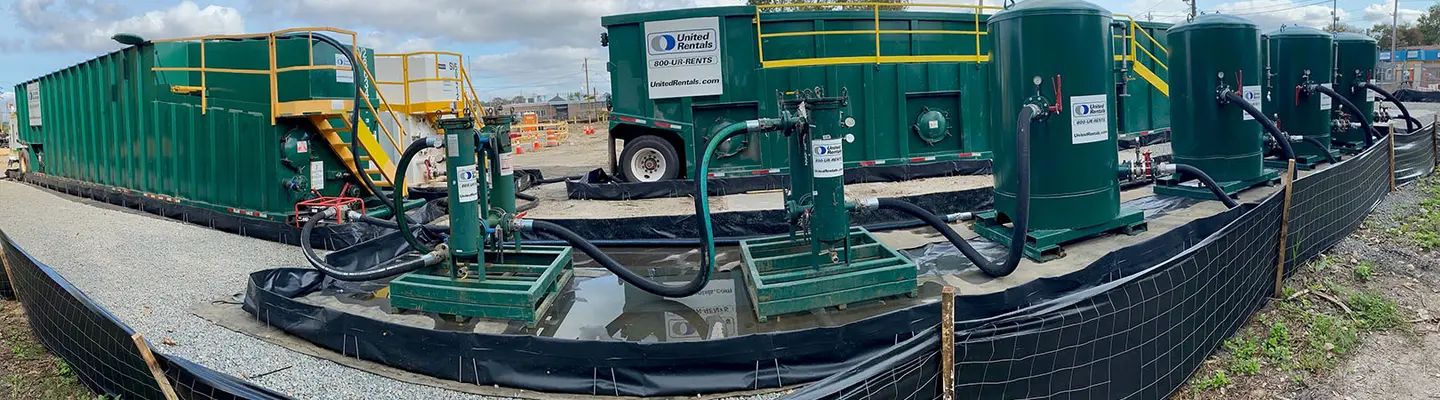
Fast, flexible and durable, temporary systems are the smarter choice in many situations.
Water treatment systems are essential for managing events such as spills, algae blooms and chemical contaminations. But here’s a surprising truth: A permanent system isn’t always necessary or optimal. A temporary water treatment system is sometimes the better choice financially and logistically.
Engineers and project managers can save time, money and effort by knowing when renting a temporary water treatment system is not only appropriate but advantageous.
4 times when a temporary water treatment system shines
Below are four instances when it pays to consider a temporary system over a permanent one.
You need short-term water treatment
When a new contaminant appears, there’s no need to rush to install a permanent water treatment system. The issue might disappear on its own if it’s the result of a naturally occurring event, such as an algae bloom. When it comes to industrial water treatment, if the contamination is the result of a production process issue, the problem will be resolved when the issue is fixed. Either way, a temporary system can filter or treat contaminants in the meantime.
You have a seasonal water filtration or treatment need
If you’re facing a seasonal spike in contaminants such as algae or summer rises in biological oxygen demand (BOD), a temporary system may be the best solution. If the water does not require year-round treatment, investing in a permanent system may be overkill.
You have an emergency water filtration need
When a spill or chemical contamination occurs, an emergency water filtration system can be up and running in a matter of days. The system can remain in place for as long as you need it and be adapted if conditions change.
You’re planning to invest in a permanent system
Not sure what water treatment technology is optimal for your process? A temporary system lets you try before you buy. You can test different setups to understand what works best before committing to a permanent system and the capital expenditure it requires.
If you need water treatment now and you’re waiting for a permanent system to be designed, approved and built, a rental system can keep you in compliance and fully operational until the permanent system comes online. Many temporary systems stay onsite for months or even years.
Benefits of temporary water treatment systems
Leveraging a temporary system offers many advantages—provided the vendor brings deep expertise in water treatment, rigorous quality inspection standards and regular maintenance protocols.
1. Speed
A temporary system can be designed and set up in days. A turnkey vendor will install the system so you don’t have to. Temporary systems don’t typically require approval, which adds to the speed advantage.
2. Modularity
Some sites have small or irregular footprints that make designing a permanent system challenging. Temporary systems are modular and can be customized to fit into the space available.
3. Turnkey service
With a temporary system, maintenance is the vendor’s problem. The vendor will perform any necessary repairs and immediately swap out equipment if necessary in the event the system goes down—there’s no need to deal with the warranty claim process or wait for new equipment orders to be filled. The operator’s only responsibility is running the equipment within known operating parameters.
4. Adaptability
A temporary installation can be modified if flow rates, water composition or other conditions shift unexpectedly.
In addition, if regulations change or technology evolves, the vendor can easily switch filter media or resins or update other system components to keep up with innovations and advancements. Permanent systems, on the other hand, can become obsolete.
5. Preservation of capital
With a temporary system, there’s no need to make a large capital expenditure. Temporary systems are typically considered operating expenses and come out of the operating budget.
6. Cost savings
In addition to avoiding a capital expenditure, you also avoid the need to hire an engineer to design and inspect a permanent system and the cost of maintaining it. In addition, while a permanent system may be subject to new tariffs and cost uncertainties resulting from shifting trade policies, temporary systems are already imported and assembled.
Consider a temporary system for your next water treatment need
Don’t overlook a temporary water treatment system the next time you face a new, unpredictable or short-term water treatment challenge. These systems are more than short-term bandages. Thanks to their modularity, speed of deployment, low upfront costs and adaptability, they often serve as well as or better than permanent systems, without the long-term commitment or maintenance headaches.
 Facebook
 X
 Linkedin
 Email
 Print
 Copy Link
 RSS Feed
